
Saul, Grace, and the Road to Damascus
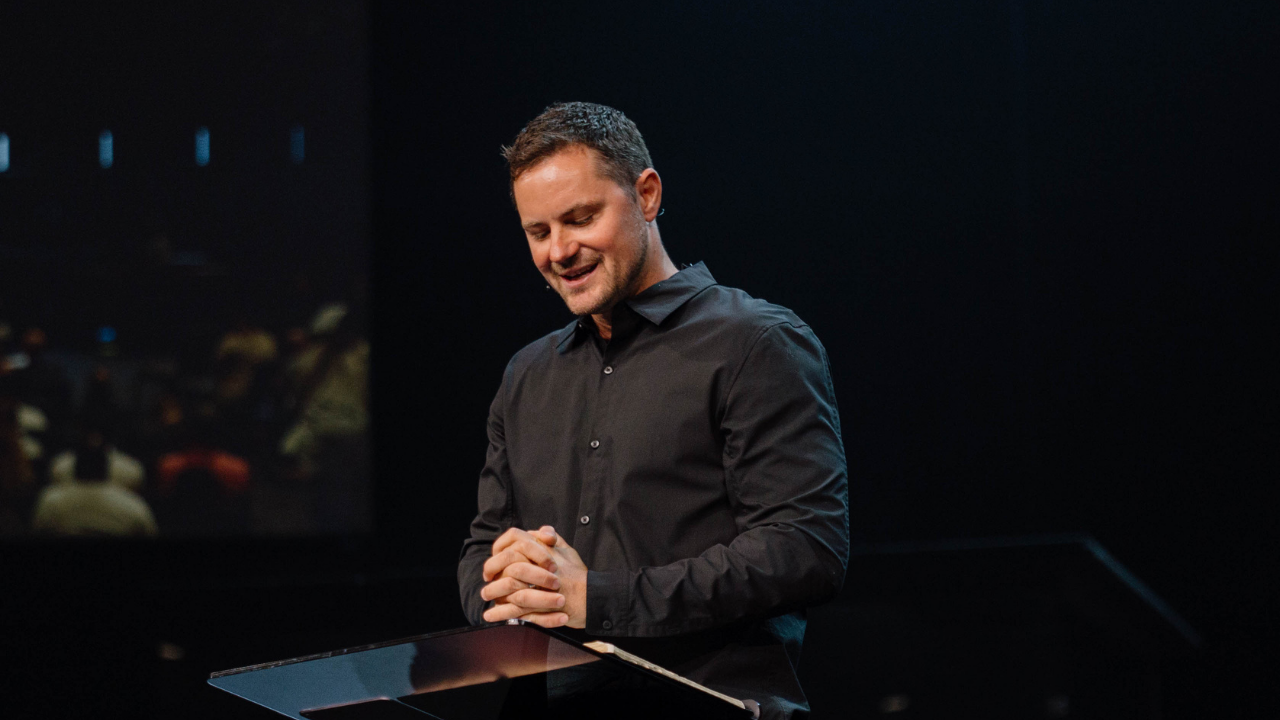
Pastor Caleb Culver
August 30, 2026 Message Recap
You can be absolutely convinced you are in the right car, going the right direction, doing it all to honor God—and still be completely wrong. Saul was.
He was on his way to Damascus with permission to arrest Christians and bring them back to Jerusalem. He was educated, disciplined, zealous, and deeply religious. He knew the law. He had studied under Gamaliel. He was not running from God; he believed he was serving Him.
That may be the most dangerous position a person can be in: completely lost and in need of a Savior, while convinced they are already standing in the truth.
Saul’s problem was not a lack of effort. He had plenty of that. His problem was that he had built his confidence on his own righteousness.
Then, suddenly, Jesus stops Saul on the road.
God often seems to move slowly until He doesn’t. Saul had spent years moving further and further into opposition to Jesus, and in a moment, everything changed. The man going to Damascus to arrest Christians arrived there blind, dependent, and waiting for someone else to tell him what to do.
And Jesus makes something clear in that encounter that Saul had completely missed: persecuting the church was not merely an attack on a group of people. Jesus says, “Why are you persecuting Me?” Every blow against His body was a blow against Him.
Saul thought he was defending God while actively fighting against Him.
That is the danger of pride. Pride would often rather stay wrong than admit it has been wrong.
Paul would eventually look back at everything he once trusted—his background, his religious record, his zeal, his obedience—and say none of it could make him righteous before God. He was not saved by good works in order to receive grace. He was saved by grace for good works. That difference is everything.
At the end of the day, none of us stands before God holding up an impressive record; we come empty-handed.
Saul had spent his life believing he had something to show. Jesus stopped him long enough to show him that he did not need a better résumé. He needed a Savior.
Scripture References:
Tap to watch the sermon!
About Radiant Church
Founded in 1996, Radiant Church has grown into a multi-location church committed to biblical teaching, discipleship, and mission.
At Radiant Church, there is an invitation to grow in your spiritual journey, build meaningful community, and truly get connected. We are passionate about helping people grow in faith, encounter the Presence of God, and become part of a church grounded in Spirit and truth.
Here's a 5-day devotional guide based on this sermon:
Day 1: Zeal in the Wrong Direction
Acts 9:1–2 | Philippians 3:4–6
Saul was not indifferent to God, he was consumed by what he believed was faithfulness, hunting down believers with letters of authority in hand. His credentials were impressive: trained under a top rabbi, blameless under the law, zealous to the point of violence. Religious zeal is not proof you are headed the right direction. It is possible to be sincerely convinced and still be sincerely wrong.
Day 2: Interrupted by Light
Acts 9:3–6 | John 1:4–5
A light from heaven stopped Saul mid-journey, and a voice spoke his name twice, the way Scripture often signals a moment of direct, personal address. Saul did not go looking for this encounter. It found him, mid-stride, mid-mission, mid-certainty. John describes Jesus as the light that darkness could not overcome, and Saul is proof that no amount of religious momentum can outrun it either.
Day 3: Three Days in the Dark
Acts 9:8–9 | Psalm 139:11–12
Saul spent three days blind, unable to eat or drink, before Ananias ever arrived. That darkness was not punishment, it was space to finally see the truth about himself. David wrote that even darkness is not dark to God, that it becomes as light around Him. Sometimes the most disorienting seasons of your life are exactly where God is doing the deepest work.
Day 4: Everything Counted as Loss
Philippians 3:7–9 | Matthew 13:44–46
Paul later described his old credentials, his pedigree, his righteousness under the law, as rubbish compared to knowing Christ. That is not self-hatred, it is recalibrated value. Jesus described the kingdom as treasure worth selling everything to obtain, and Paul lived out exactly that trade. What you count as gain reveals what you actually believe is valuable.
Day 5: Grace for the Chief of Sinners
1 Timothy 1:13–16 | Ephesians 2:8–9
Years later, Paul called himself the chief of sinners, not because his sin was uniquely worse than everyone else's, but because he had seen with unusual clarity how much mercy it took to save him. Paul insists salvation is a gift, not a result of works, so that no one has room to boast. The same grace that stopped Saul on the road to Damascus is the same grace available to you today, no matter how far gone you think you are.