
Your Worship Will Never Outgrow Your View of Jesus
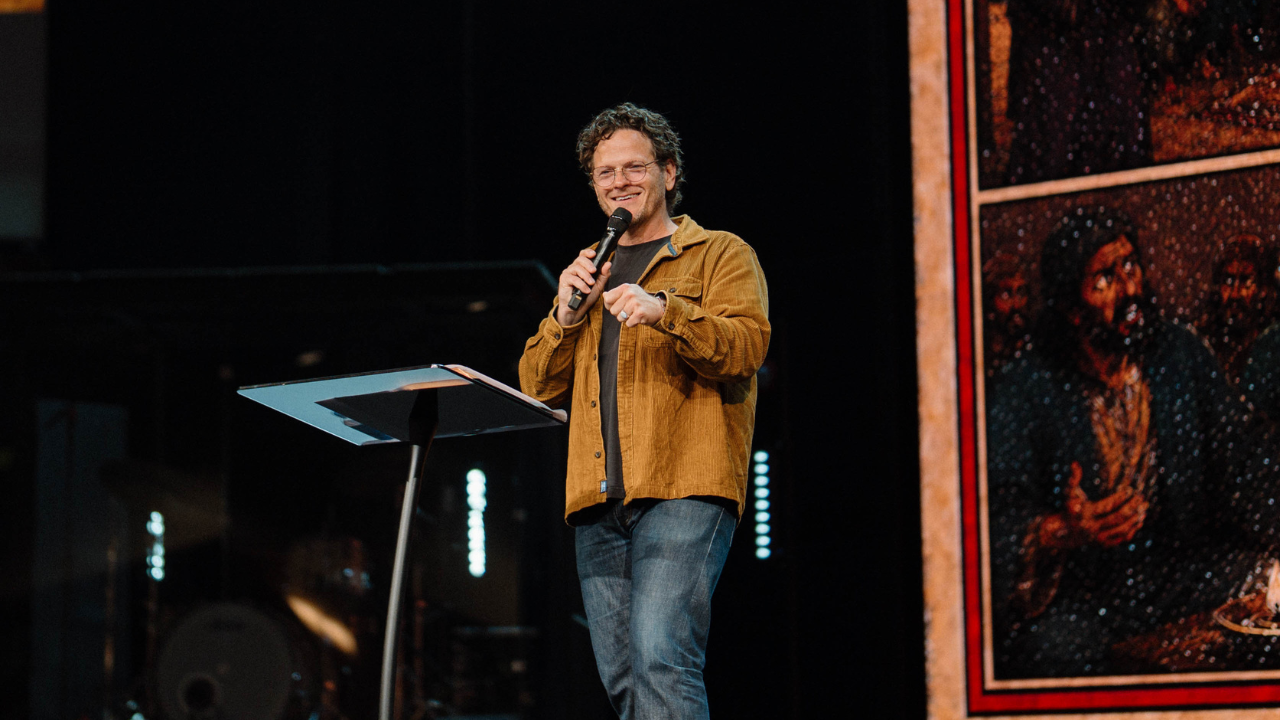
Pastor Ryan Kondo
July 19, 2026 Message Recap
Six days before Passover, Jesus came to Bethany for a dinner at the home of Mary, Martha, and Lazarus—the brother He had recently raised from the dead. Martha served the meal, while Lazarus reclined at the table, living proof of Jesus' power over death. Then Mary did something that caused John to slow down and describe every detail.
She took a pound of pure nard, an ointment worth an entire year's wages, and poured it over the feet of Jesus. Then she let down her hair—the very thing her culture considered a woman's glory—and used it to wipe His feet.
The fragrance filled the entire house. There was no ignoring what she had done.
Immediately, Judas objected. He wrapped his criticism in concern for the poor, though John tells us plainly that he was a thief who regularly stole from the money bag. Extravagant worship has always attracted critics, but Jesus silenced the criticism just as quickly.
"Leave her alone," He said. "She has kept it for the day of my burial."
That raises an important question: Why would Mary do this?
What would lead a young woman to pour out a year's wages at the feet of Jesus in front of an entire room of people?
The answer isn't found only in John 12. It's found in Mary's entire relationship with Jesus. Every time Mary appears in the Gospels, she is found in the same place: at His feet.
She sat at His feet while Martha busied herself with serving, choosing to listen to His teaching above everything else. When Lazarus died, she fell at His feet in grief, and Jesus met her there with compassion before raising her brother from the grave. Now, in Bethany, she is once again at His feet—this time pouring out everything she has in an act of worship.
Mary didn't suddenly become extravagant.
Her worship was the natural overflow of years spent knowing Jesus.
Every conversation, every tear, every moment spent listening at His feet expanded her understanding of who He was. That is the invitation of John 12.
The point of this passage isn't to ask whether we can imitate Mary's extravagance. It is to ask whether we are cultivating the same intimacy that produced it.
Are we sitting at His feet before rushing into activity?
Are we listening to His words instead of treating Scripture like another item on a checklist?
Are we bringing Him our grief instead of carrying it alone or numbing it somewhere else?
Many of us admire Mary's worship while overlooking the hidden life that formed it. We want the perfume without the posture. We want the public expression without the private devotion.
But worship is never sustained by emotion alone. It is formed through relationship.
The more clearly we see Jesus, the more naturally our lives become an offering to Him. That’s why Mary's story continues to be told. Jesus said that wherever the Gospel is preached, her act of worship would be remembered. Two thousand years later, His words are still true.
Her story reminds us that worship doesn't begin with extravagant gifts or emotional moments. It begins at the feet of Jesus.
And the longer we remain there, the more natural, wholehearted worship becomes.
Scripture References:
Tap to watch the sermon!
About Radiant Church
Founded in 1996, Radiant Church has grown into a multi-location church committed to biblical teaching, discipleship, and mission.
At Radiant Church, there is an invitation to grow in your spiritual journey, build meaningful community, and truly get connected. We are passionate about helping people grow in faith, encounter the Presence of God, and become part of a church grounded in Spirit and truth.
Here's a 5-day devotional guide based on this sermon:
Day 1: Sitting at His Feet
Luke 10:38–42 | Psalm 27:4
While Martha busied herself with the details of hosting, Mary chose to sit at the feet of Jesus and simply listen. Jesus told Martha that Mary had chosen the better portion, one that would not be taken from her. In a life full of legitimate responsibilities, this passage does not condemn service. It asks whether we are still making room to simply sit with Jesus before we do anything else for Him.
Day 2: Weeping at His Feet
John 11:32–35 | Psalm 56:8
When Mary fell at Jesus' feet, grieving her brother's death, He did not offer a theological explanation first. He wept alongside her. That is who He is with us in our pain. He is not distant or clinical. The Psalmist says God collects our tears in a bottle, meaning our grief matters to Him. If you are carrying pain today, this is an invitation to bring it directly to Jesus rather than burying it or numbing it elsewhere.
Day 3: A Worship That Grew Over Time
John 12:1–3 | Romans 12:1
Mary's extravagant act of pouring out costly oil on the feet of Jesus did not happen in isolation. It was the fruit of every prior encounter with Him, every time she had listened and every time she had wept in His presence. Paul urges us to offer our bodies as a living sacrifice, an act of worship that is not confined to a single moment but describes an entire posture of life. Extravagant worship is not manufactured. It grows.
Day 4: When Worship Draws Criticism
John 12:4–6 | 1 Peter 4:14
Judas criticized Mary's gift using the language of concern for the poor, but his motives were self-serving. Extravagant worship will often be met with people who have a reason it should have been done differently. Peter reminds us that being criticized for devotion to Christ is not a sign we have gone too far. It is often confirmation that something real took place. Do not let critique talk you out of extravagant devotion.
Day 5: Your Worship Will Never Outgrow Your View of Jesus
Matthew 26:6–13 | Colossians 1:15–20
Jesus defended Mary's act and said her story would be told wherever the Gospel was preached. Her worship matched the size of who she believed Jesus to be. Colossians describes Jesus as the image of the invisible God, the one in whom all things hold together. The size of our worship is always a reflection of the size of our view of Him. If your worship feels small, the invitation this week is not to try harder, but to spend more time at his feet until your view of Him grows.